Iris Zimmermann · 30 September 2026
Timing Disruptions in Coral-Algae Relationships During Controlled Temperature Fluctuations
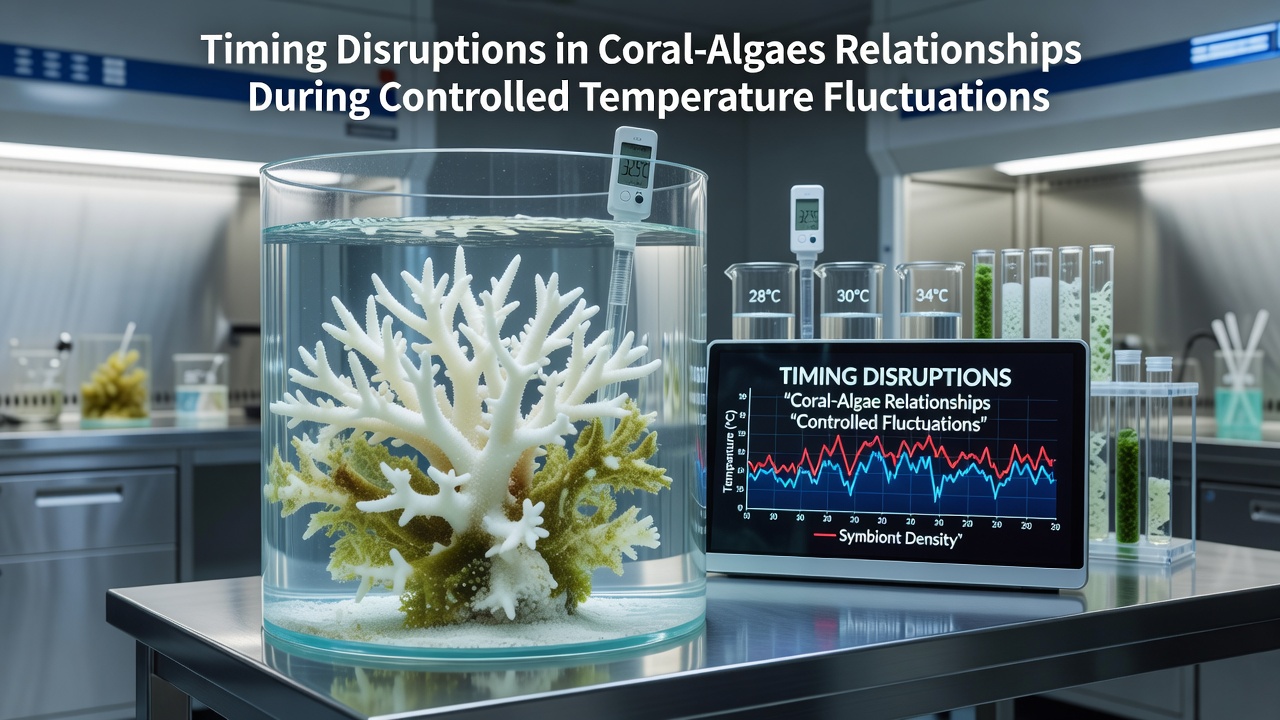
Controlled laboratory experiments reveal that coral-algae symbioses experience measurable shifts in daily and seasonal interaction cycles when exposed to repeated temperature swings of 2 to 4 degrees Celsius, and these shifts alter the timing of nutrient exchange, algae replication rates, and host cell division patterns. Researchers track these changes through fluorescence measurements and genetic sampling that quantify the density of Symbiodiniaceae cells inside coral tissue over successive days, while data loggers record exact thermal profiles applied to each tank system.
Core Mechanisms of the Symbiosis
Corals maintain a mutualistic relationship with photosynthetic algae that supply up to 90 percent of the host's metabolic energy through translocation of organic compounds, yet the partnership operates on tightly regulated circadian and lunar rhythms that govern when algae divide and when the coral expels excess cells. Temperature fluctuations disrupt these rhythms because elevated peaks accelerate algae division beyond the host's capacity to accommodate new cells, and subsequent cooling phases trigger premature expulsion events that normally occur only during stress thresholds reached after weeks of exposure. Studies conducted in recirculating systems demonstrate that the interval between peak temperature and the onset of measurable cell loss shortens from an average of 14 days under stable conditions to as few as 6 days when fluctuations repeat every 48 hours.
Experimental Designs and Observed Timing Shifts
Teams maintain replicate fragments of Acropora and Pocillopora species in separate mesocosms programmed to mimic diurnal ranges recorded on reefs, then overlay additional oscillations that simulate heat-wave patterns projected for mid-century scenarios. Sampling occurs at four-hour intervals across 21-day runs, and results show that algae mitotic indices peak four to six hours earlier in fluctuating treatments compared with constant-temperature controls, while coral gastrodermal cell turnover lags by a similar margin. This desynchronization produces a temporary surplus of algae that the coral cannot retain, leading to net declines in symbiont density even when average temperatures remain within the species' thermal tolerance window.
One research group documented that recovery of pre-experiment symbiont densities required 11 additional days in fluctuating regimes, and the delay correlated with altered expression of clock genes in both partners. Genetic assays further indicate that certain algal strains reduce production of photoprotective pigments during the cooling phase of each cycle, which increases oxidative stress inside host cells and accelerates the timing of autophagy pathways responsible for digesting damaged symbionts.
Regional Data and Broader Patterns
Observations compiled across multiple facilities show consistent patterns regardless of geographic origin of the coral genotypes, and figures from the National Oceanic and Atmospheric Administration indicate that similar timing mismatches appear in field bleaching events when daily temperature ranges exceed 3 degrees Celsius for more than five consecutive days. Australian Institute of Marine Science monitoring programs have recorded parallel shifts in natural populations on the Great Barrier Reef during summer temperature spikes, where the interval between initial stress and visible paling compresses under fluctuating rather than steadily elevated conditions.
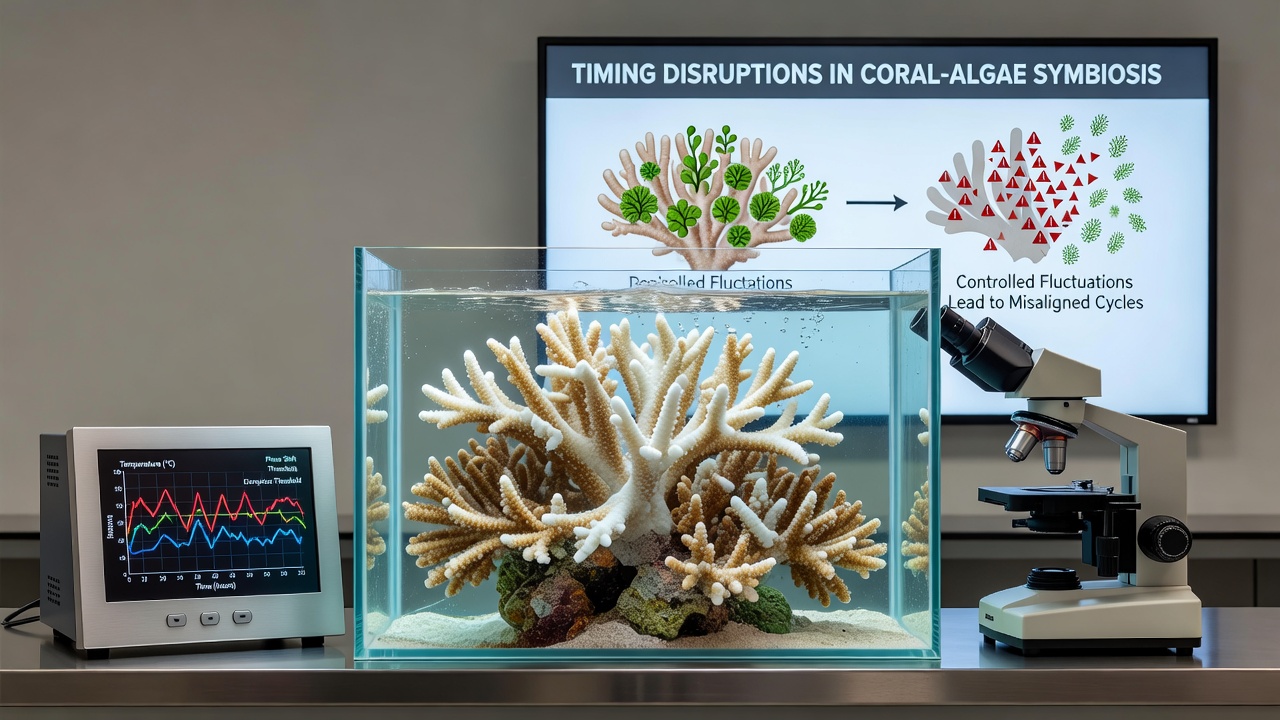
Additional measurements track the release of algae into surrounding water, and counts reveal that expulsion pulses align with the descending limb of each temperature oscillation rather than with the absolute maximum value. This phase relationship suggests that the cooling portion of the cycle may serve as the proximate cue for host rejection mechanisms that evolved under more stable thermal regimes. Researchers note that the magnitude of each pulse scales with the rate of temperature change, so steeper drops produce larger expulsion events even when the total thermal dose remains constant.
September 2026 Research Outlook
Planned expansions of these experiments will begin in September 2026 and incorporate real-time metabolomic profiling to capture the exact compounds transferred between partners at each phase of the fluctuation cycle. Early protocols call for simultaneous manipulation of light intensity synchronized with temperature to test whether the timing disruptions intensify when photosynthetic demand and thermal stress coincide. Preliminary modeling indicates that such combined stressors could advance the onset of net carbon deficit by an additional three to five days relative to temperature-only treatments.
Conclusion
Collective evidence from controlled systems demonstrates that temperature fluctuations alter the temporal coordination of coral-algae interactions at multiple scales, from gene expression to population dynamics within host tissue. These timing disruptions reduce the duration of productive symbiosis and extend recovery intervals, and the patterns hold across diverse coral genera and experimental facilities. Continued refinement of fluctuation protocols will supply quantitative parameters for predictive models that forecast symbiosis stability under future thermal variability.