Theo Friedrich · 16 September 2026
Student-Led Mapping of Artificial Structures Reveals Seasonal Symbiont Timing Shifts in Baltic Tank Systems
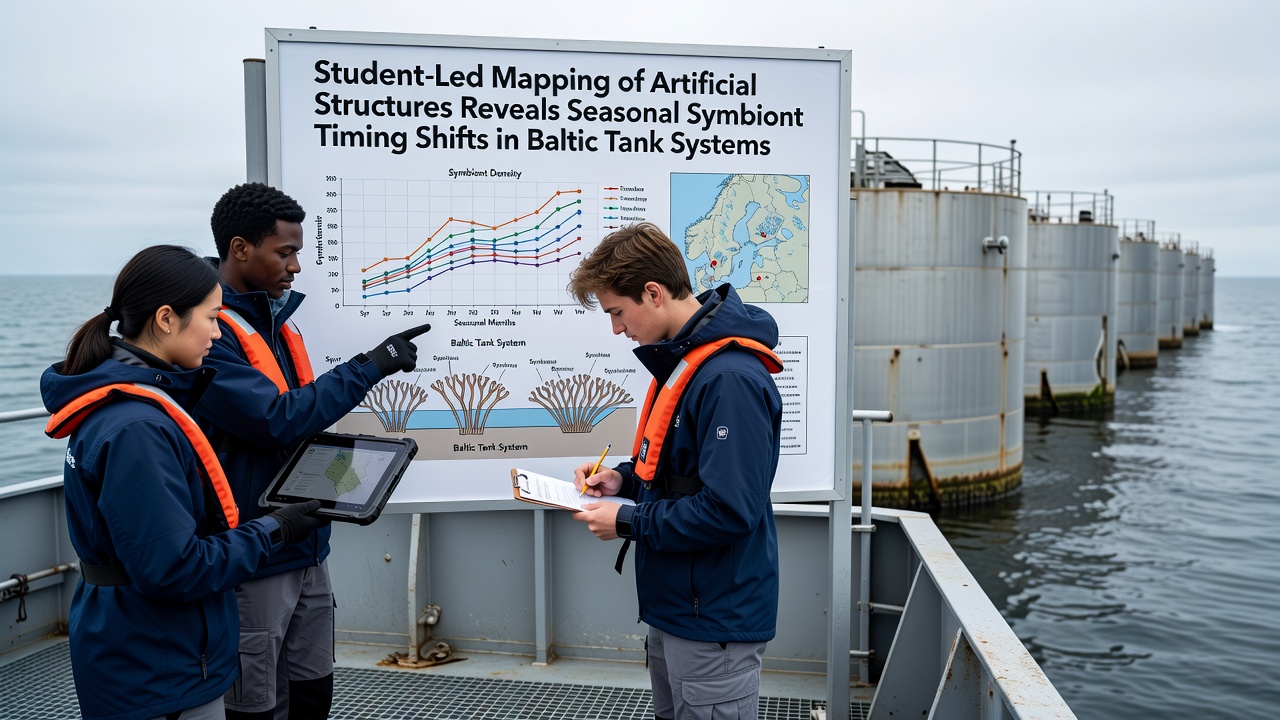
University students across Poland have taken the lead in mapping artificial structures placed inside controlled Baltic tank systems, and their work has uncovered clear shifts in symbiont timing that align with seasonal changes in temperature and light. The project began as a hands-on extension of ongoing marine biology coursework at several institutions, where participants documented how symbiotic microorganisms adjust their activity patterns inside tanks that replicate Baltic Sea conditions. Data collected over multiple cycles show that certain symbiont populations peak earlier in spring and decline more rapidly in autumn compared with records from five years ago.
Setting Up the Tank Systems
Researchers constructed the tank arrays at coastal laboratories to mimic salinity gradients, nutrient loads, and seasonal light cycles typical of the southern Baltic. Students installed modular artificial structures made from concrete, ceramic, and recycled plastic composites, then positioned sensors at multiple depths to track temperature, dissolved oxygen, and pH every fifteen minutes. The design allowed teams to compare open-water reference tanks with those containing added structures, revealing how physical complexity influences microbial settlement and retention. By September 2026 the network had expanded to twelve tanks across three sites, each running continuous monitoring for at least eighteen months.
Mapping Methods and Student Roles
Participants used photogrammetry and laser scanning to create three-dimensional models of every structure, then overlaid microbial sampling grids that aligned with surface features. Weekly collections involved swabbing designated zones and filtering water volumes for DNA extraction, followed by sequencing to identify dominant symbiont taxa. Students handled most of the fieldwork and initial data processing, while faculty provided oversight on statistical modeling. The resulting maps showed that structures with higher surface roughness retained thicker biofilms during summer months, yet these same areas experienced faster symbiont turnover once autumn cooling began.
Key Findings on Seasonal Shifts
Analysis of sequencing data indicated that the timing of peak symbiont abundance has advanced by roughly twelve days since baseline measurements began in 2021. Spring blooms of photosynthetic symbionts now start when water temperatures reach 7.8 °C rather than the previous threshold near 9 °C, while autumn declines accelerate once temperatures drop below 12 °C. These patterns held across both natural and artificial surfaces, although structures placed at mid-depths showed the most pronounced changes. Nutrient addition experiments conducted in parallel tanks confirmed that elevated nitrogen levels amplify the earlier spring peaks but do not alter the accelerated autumn decline, pointing to temperature as the primary driver.
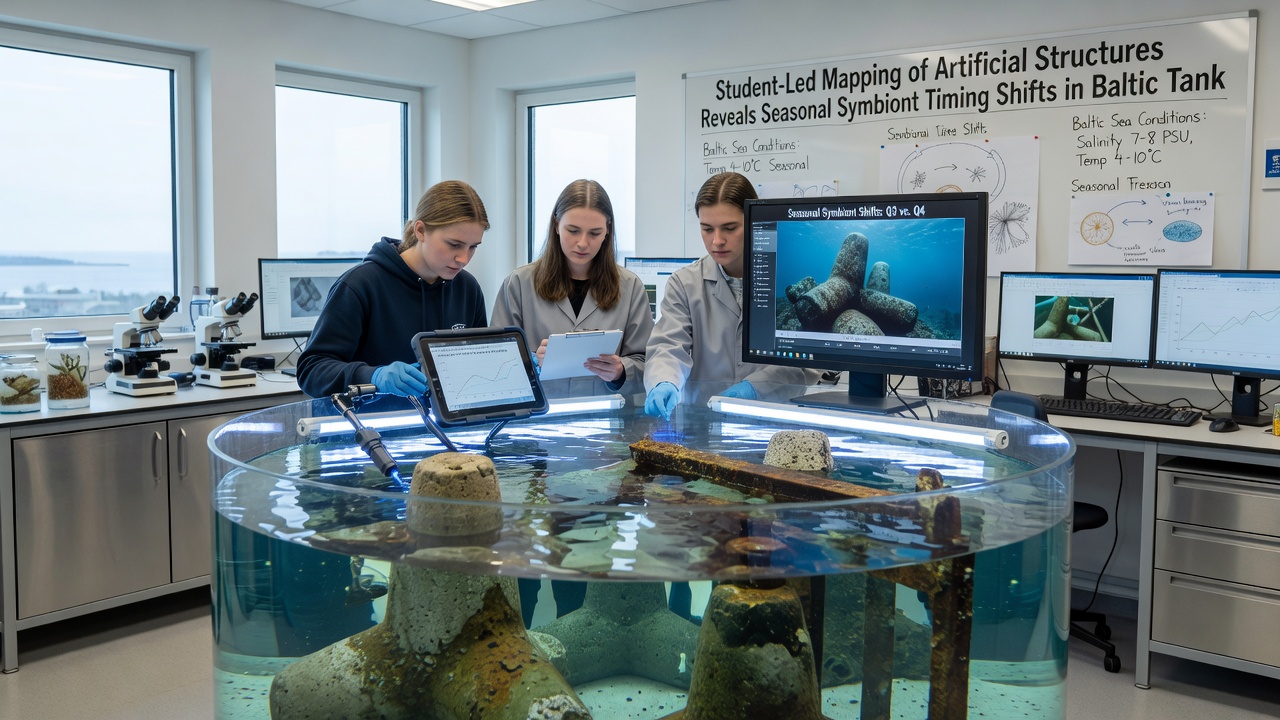
Cross-referencing with field data from the Gulf of Gdańsk revealed similar timing shifts in natural hard substrates, suggesting the tank results reflect broader Baltic trends. Students noted that certain bacterial groups associated with nitrogen fixation appeared more consistently on artificial surfaces during late summer, a detail that may help explain localized nutrient recycling inside the tanks.
Integration with Broader Research
The student mapping project connects to larger European efforts tracking marine microbial responses under changing climate conditions. Reports from the Helsinki Commission document parallel shifts in pelagic communities across the Baltic proper, while data from Australian Institute of Marine Science long-term reef monitoring programs show analogous symbiont adjustments in warmer waters. By sharing protocols and datasets, the Polish teams have contributed to a growing international comparison of artificial versus natural habitat performance. Laboratory notebooks from the project also record unexpected colonization by non-native microeukaryotes on some ceramic tiles, prompting follow-up surveys that are still underway.
Data Processing and Validation
After each sampling round, students ran quality-control checks on sensor logs and removed outliers caused by temporary equipment fouling. They then applied generalized additive models to separate seasonal cycles from longer-term trends, confirming that the observed timing shifts exceed normal interannual variability. Validation against independent chlorophyll fluorescence readings from the same tanks strengthened confidence in the sequencing results. The entire workflow, from field collection to statistical output, was documented in open notebooks so that subsequent cohorts could replicate or extend the work without starting from scratch.
Conclusion
The student-led effort has produced one of the most detailed seasonal records yet available for symbiont dynamics inside Baltic simulation systems. Continued mapping through future cycles will test whether the documented shifts stabilize or continue to advance, while expanded sensor coverage may clarify how structure orientation and material choice interact with temperature thresholds. The datasets generated so far already support ongoing modeling work at partner institutions and add a practical layer to regional assessments of marine habitat change.