Ellis Friedrich · 2 September 2026
A research team from Poland has documented notable changes in coral-associated microbial communities under controlled laboratory conditions designed to mimic future ocean scenarios. The findings, published through the Coral Reef Research Pathways initiative at coralpath.edu.pl, highlight how elevated temperatures and altered nutrient levels influence the bacterial diversity living within coral tissues.
Experimental Design and Data Collection
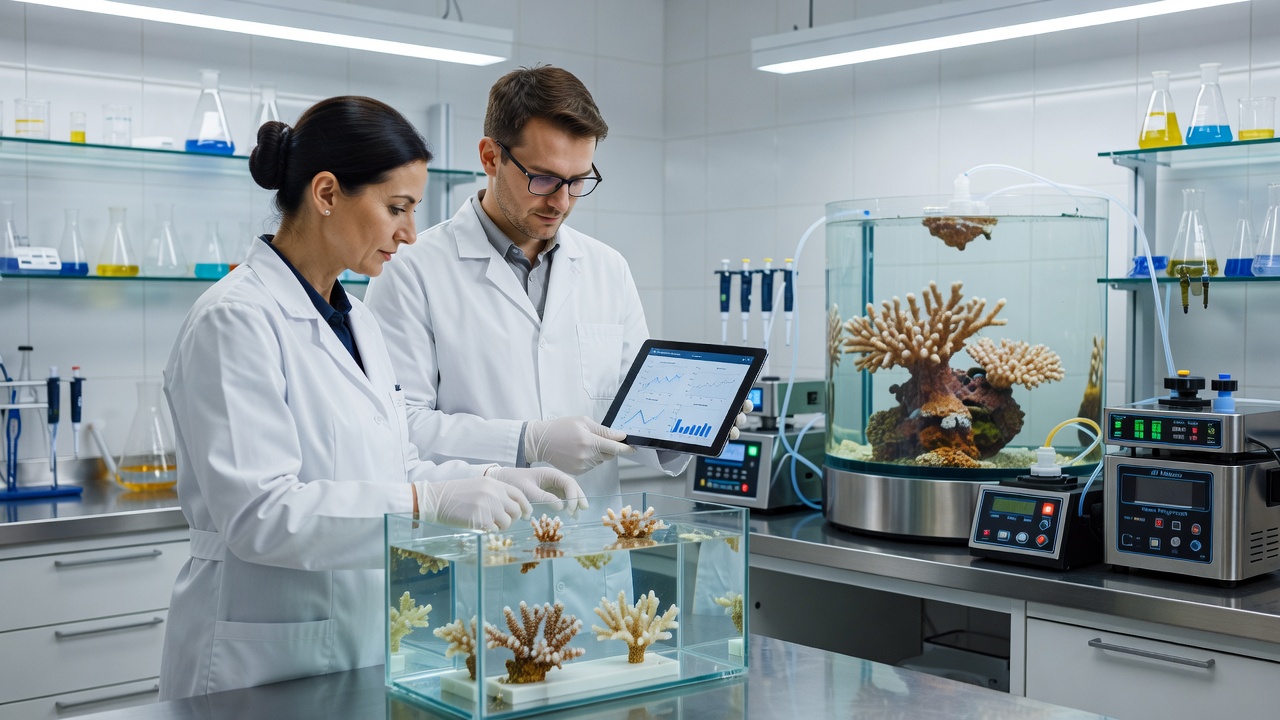
Scientists at the University of Gdańsk Marine Station selected three common Indo-Pacific coral species for the study. Fragments were acclimated in mesocosm tanks replicating current reef conditions before exposure to two stress treatments: a 2°C temperature increase and elevated nitrate concentrations. Over eight weeks, researchers collected tissue samples at regular intervals and performed 16S rRNA gene sequencing to profile bacterial composition. Control tanks maintained ambient parameters to provide baseline comparisons. DNA extraction and bioinformatics pipelines followed standardized protocols established by the European Marine Biological Resource Centre.
Initial diversity indices revealed a rapid decline in beneficial Endozoicomonas populations within the first 14 days of warming. Concurrently, opportunistic Vibrio and Alteromonas genera increased in relative abundance. Nutrient enrichment amplified these trends, producing distinct community clusters visible through principal coordinate analysis. Physiological measurements indicated reduced photosynthetic efficiency in corals hosting the altered microbiomes, suggesting a link between microbial restructuring and host stress responses.
Implications for Reef Resilience
The observed microbiome shifts correlated with measurable declines in coral calcification rates, raising concerns about long-term reef framework maintenance under projected climate conditions. Team leader Dr. Anna Kowalska noted that certain rare bacterial taxa appeared to confer short-term thermal tolerance, opening avenues for probiotic interventions. However, she emphasized that laboratory results require validation through field transplant experiments along the Polish Baltic monitoring sites and Indo-Pacific partner reefs. The study underscores the importance of integrating microbial metrics into coral conservation models. Future phases of the Coral Reef Research Pathways program will examine viral and fungal components of the holobiont to build a more complete picture of symbiosis breakdown. These data contribute to international efforts tracking microbiome-mediated adaptation across global reef systems.