Ellis Friedrich · 2 September 2026
Researchers from Poland have reported notable changes in coral-associated microbial communities during laboratory experiments designed to mimic projected climate change conditions in marine environments. The findings underscore the sensitivity of coral holobionts to environmental perturbations. Corals play a crucial role in marine biodiversity supporting thousands of species and understanding their microbial partners is essential for conservation efforts worldwide.
Lab Simulation Setup
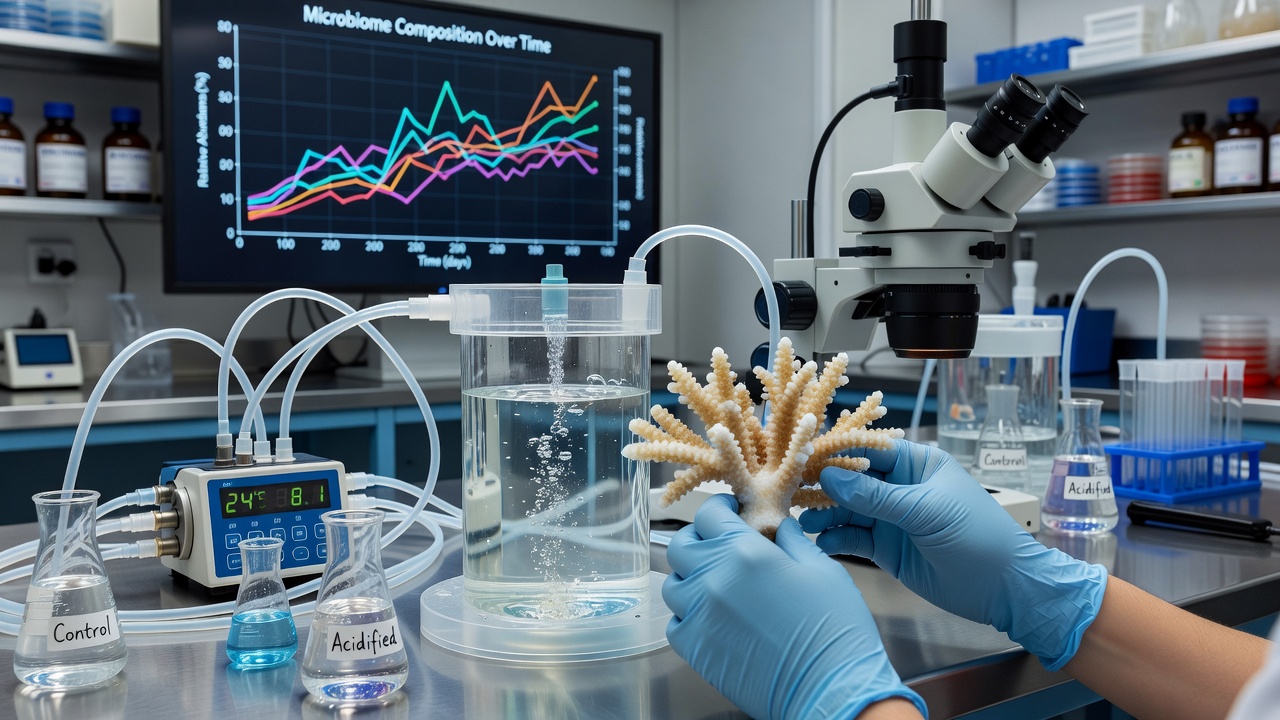
The study involved maintaining fragments of reef-building corals in specialized tanks where parameters such as temperature salinity and carbonate chemistry were precisely controlled. Over several months the team monitored microbial diversity using next-generation sequencing methods. Initial results indicated that elevated temperatures led to a reduction in microbial evenness with certain taxa becoming dominant. This research builds upon previous studies by incorporating multi-stressor approaches that reflect real-world ocean changes more accurately. Additional simulations incorporated ocean acidification by lowering pH levels which further altered the composition of the microbiome. Beneficial nitrogen-fixing bacteria decreased in abundance potentially affecting the coral nutrient cycling capabilities. Detailed statistical analyses confirmed the significance of these shifts across replicate tanks.
Implications for Coral Health
These microbiome shifts were associated with physiological stress markers in the host corals including lower photosynthetic efficiency in symbiotic algae. The Polish scientists suggest that such alterations could compromise the resilience of coral reefs to environmental stressors. Future research pathways may focus on probiotic interventions to stabilize microbial communities in vulnerable reefs. The work contributes to international efforts in understanding and mitigating coral decline highlighting the importance of microbial ecology in reef conservation strategies. Expanded analyses are planned to include more coral species and longer exposure periods to better predict ecosystem responses. Collaboration with international partners is expected to enhance the scope of these investigations. Policy makers are urged to consider these microbial dynamics when developing climate adaptation plans for coastal regions.