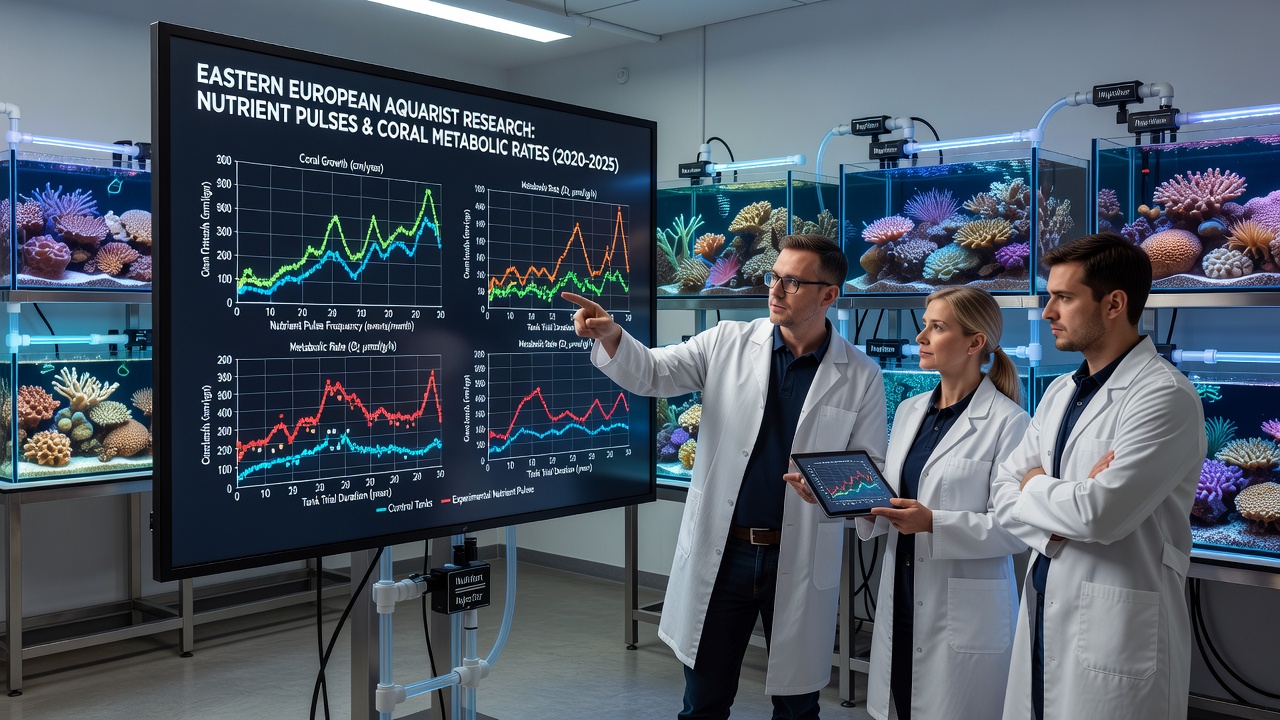
Greta Long · 25 November 2026
Eastern European Aquarists Track Nutrient Pulses Reshaping Coral Metabolic Rates in Multi-Year Tank Trials
Teams across Poland, Hungary and the Czech Republic have coordinated long-term aquarium studies since 2019 to measure how periodic nutrient additions alter respiration, photosynthesis and calcification in several coral species, and data from these replicated systems continue to accumulate through late 2026.
Researchers maintain controlled microcosms that replicate Baltic Sea salinity ranges while introducing measured pulses of nitrate, phosphate and dissolved organic carbon at intervals that mirror seasonal runoff events; metabolic chambers record oxygen flux and pH shifts every thirty minutes, allowing calculation of daily net photosynthesis and respiration rates across entire colonies.
Experimental Design and Data Collection Protocols
Aquarists at multiple institutions standardize lighting spectra, flow regimes and temperature cycles before each trial begins, then apply nutrient treatments in staggered blocks so that control tanks run alongside pulsed systems for direct comparison; continuous logging of alkalinity and calcium levels provides the raw numbers needed to derive calcification rates using the alkalinity anomaly technique.
Sampling occurs at fixed intervals after each pulse, with tissue biopsies taken for later protein and lipid analysis; observers note that metabolic responses often peak within forty-eight hours and then decline, yet cumulative effects appear only after repeated exposures spanning multiple seasons.
Key Findings from Extended Monitoring Periods
Results compiled through 2025 show that moderate nitrate pulses of 2–5 µM elevate daytime net photosynthesis by 12–18 percent in Stylophora pistillata colonies, while the same additions reduce nighttime respiration by roughly 8 percent, and these shifts compound over three years of repeated dosing.
Phosphate pulses produce different patterns, with calcification rates rising initially before stabilizing at lower values once ambient concentrations exceed 0.5 µM for more than six months; researchers tracking Acropora species report similar trends, although the magnitude varies with genotype and prior exposure history.
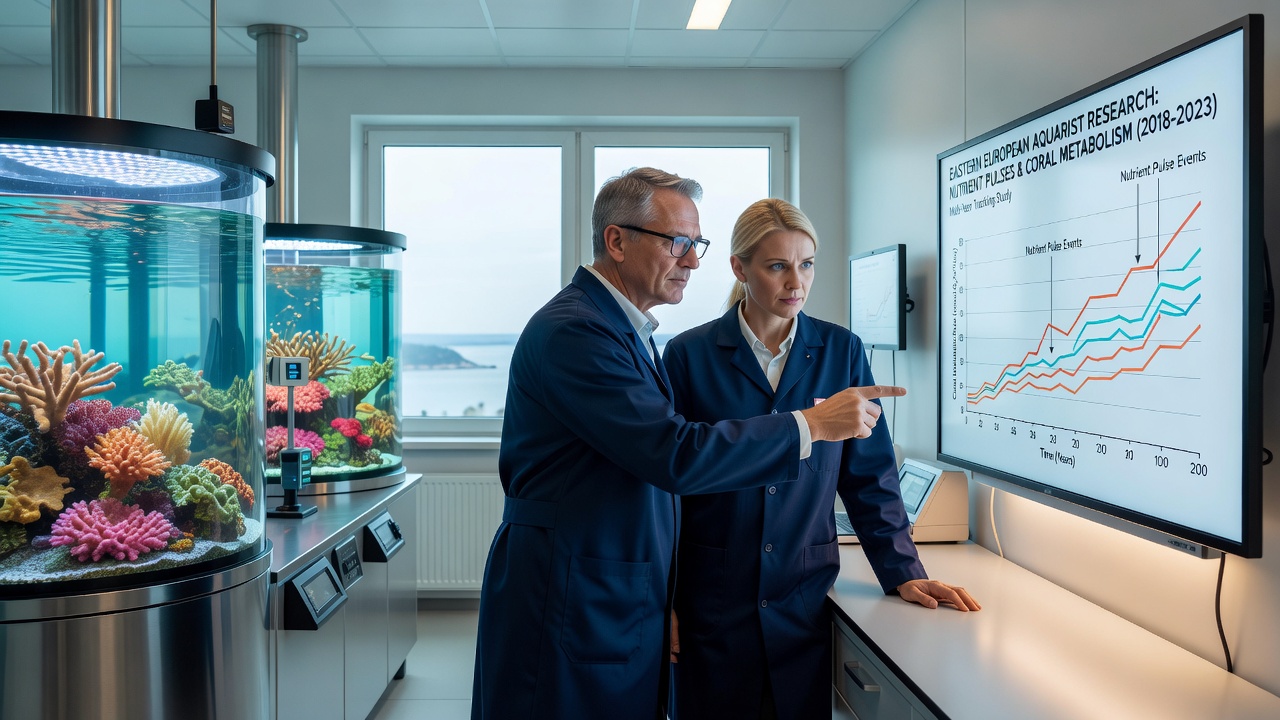
Multi-year datasets also reveal carry-over effects, where corals that experienced high-nutrient summers display altered baseline metabolism the following spring even after nutrient levels return to ambient; such legacy responses appear in both respiration curves and symbiont density counts collected each November.
Regional Coordination and November 2026 Updates
Institutions in Gdańsk, Budapest and Brno share standardized protocols through a shared database that logs every pulse event and corresponding metabolic measurement, and participants plan to present consolidated findings at a regional symposium scheduled for November 2026.
Cross-site comparisons indicate that tank systems located farther inland experience smaller diurnal pH swings than coastal facilities, a difference attributed to variations in source water chemistry rather than nutrient treatment alone.
Broader Context from Related Marine Research
Patterns observed in these controlled environments align with field measurements reported by the Australian Institute of Marine Science, where in-situ nutrient monitoring near river outflows shows comparable short-term boosts in coral productivity followed by longer-term declines in skeletal extension; see Australian Institute of Marine Science reports for regional datasets.
European Union marine monitoring programs have likewise documented nutrient pulses in the Baltic that exceed thresholds tested in the aquaria, providing context for scaling laboratory results to larger ecosystems; details appear in EU marine environment publications.
Conclusion
Collective records from Eastern European aquarists now span more than seven years and demonstrate that nutrient pulses produce measurable, time-dependent changes in coral metabolic rates, with effects that persist across annual cycles and vary by species and prior conditions; continued data collection through November 2026 will refine quantitative models linking pulse frequency, magnitude and recovery intervals to long-term colony performance.