Iris Zimmermann · 14 October 2026
Coral Energy Dynamics Under Salinity Stress: Findings from Eastern European Controlled Environment Studies
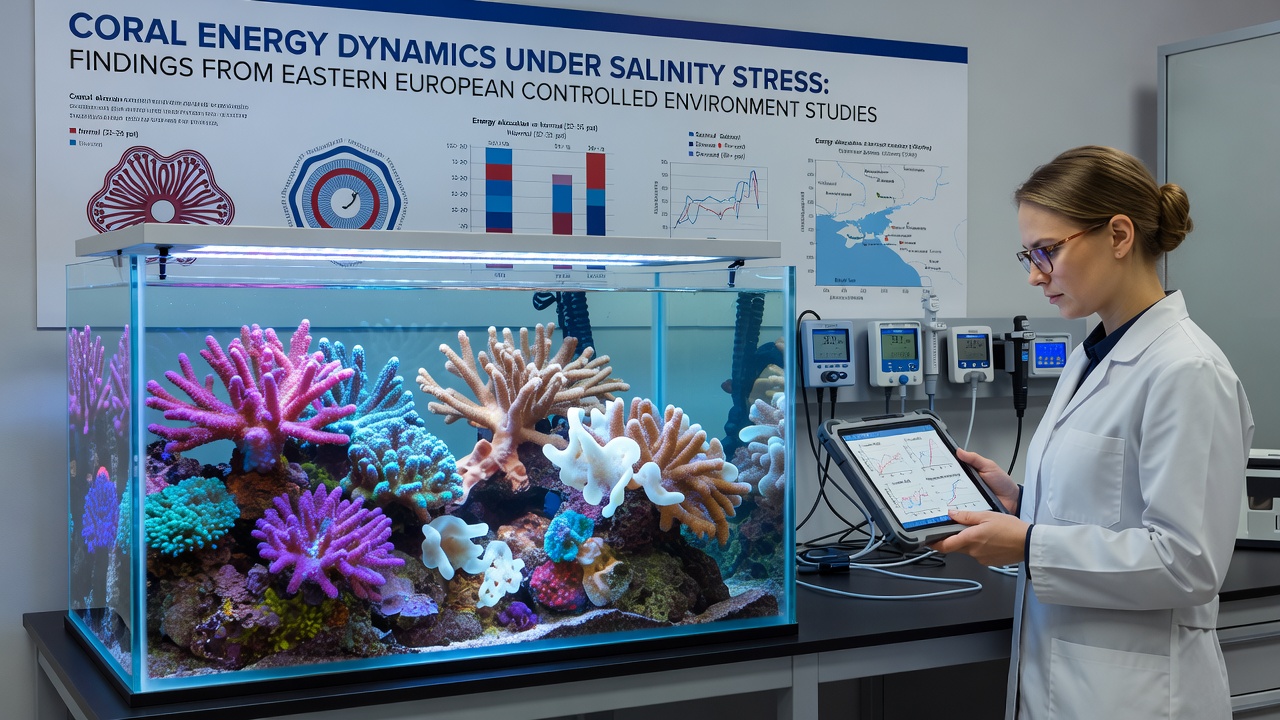
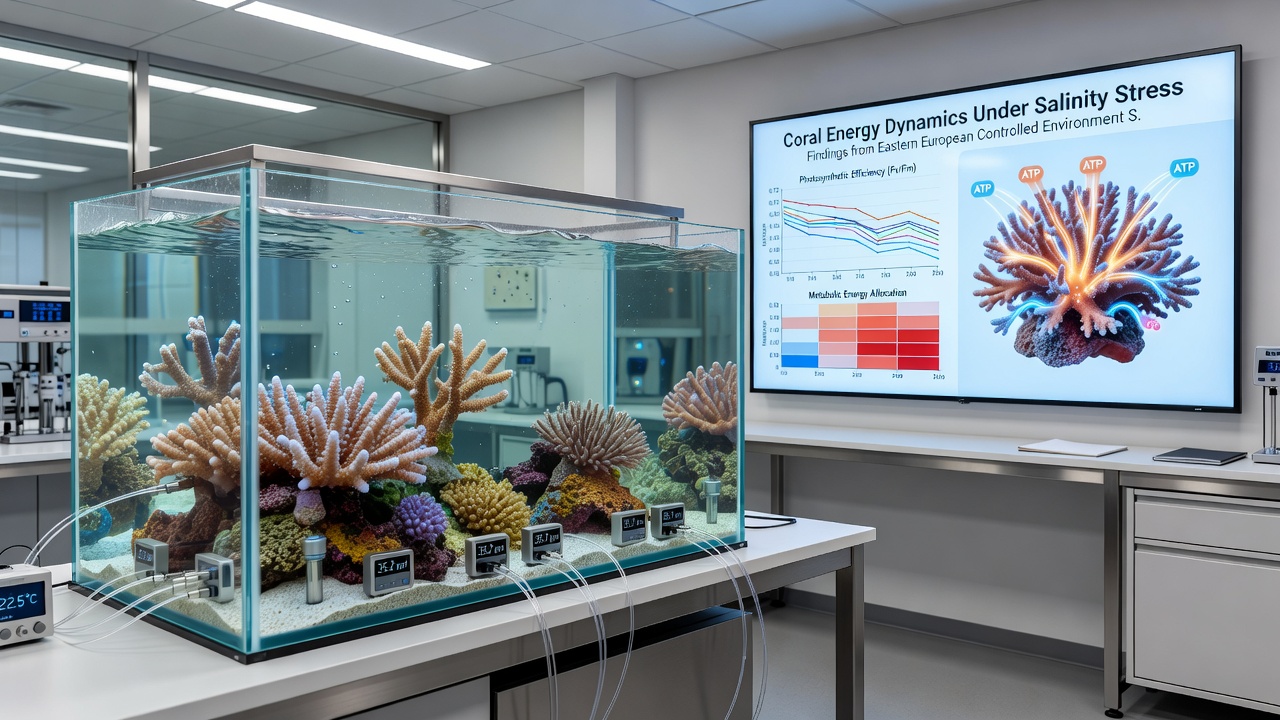
Controlled environment research from Eastern European laboratories has examined how salinity variations alter energy allocation in coral holobionts, with experiments focusing on photosynthetic output, respiratory rates, and symbiotic nutrient exchange. Teams in Poland and the Czech Republic have maintained replicate tank systems where salinity levels ranged from 25 to 40 practical salinity units while tracking adenosine triphosphate production and carbon fixation pathways. Data collected through October 2026 show consistent patterns of reduced photosystem II efficiency when salinity drops below 30 units, accompanied by elevated mitochondrial respiration that consumes stored carbohydrates at faster rates.
Experimental Design in Eastern European Facilities
Researchers established closed-loop mesocosms that replicate Baltic Sea conditions while allowing precise manipulation of ionic composition, and they introduced Indo-Pacific coral species such as Stylophora pistillata alongside local temperate specimens. Sensors recorded dissolved oxygen flux every fifteen minutes, chlorophyll fluorescence provided continuous estimates of electron transport, and liquid chromatography quantified shifts in lipid and protein reserves. Multiple runs extended across six-month periods, with salinity ramps applied gradually over seventy-two hours to mimic natural freshwater pulses from river discharge. Calibration protocols ensured that temperature remained at 18 degrees Celsius and light intensity followed a 12-hour photoperiod at 200 micromoles per square meter per second.
Key Measurements of Energy Flow
Under hyposaline conditions, net photosynthesis declined by an average of 28 percent across three species, while dark respiration increased by 19 percent, producing a net negative energy balance after forty-eight hours. Researchers documented accelerated translocation of photosynthates from algal symbionts to the coral host, yet total carbon retention within host tissues fell because oxidation rates outpaced supply. Lipid class analysis revealed depletion of triacylglycerols and accumulation of free fatty acids, indicating mobilization of energy stores to sustain elevated metabolic demand. Stable isotope labeling with carbon-13 confirmed that newly fixed carbon moved more rapidly into the host under stress, yet overall incorporation into structural proteins decreased.
Comparative Data Across Salinity Gradients
When salinity returned to control levels, recovery trajectories differed by species; Acropora colonies regained 85 percent of original photosynthetic capacity within ten days, whereas Pocillopora specimens required nearly three weeks. Enzyme assays showed upregulation of carbonic anhydrase and downregulation of Rubisco activase during the stress phase, patterns that reversed during recovery. Researchers noted that corals preconditioned with moderate salinity fluctuations maintained higher ATP pools and exhibited smaller drops in quantum yield during subsequent challenges. These observations emerged from parallel tank arrays at two separate institutions, allowing cross-validation of metabolic flux measurements.
Integration with Regional Environmental Records
Field data from the southern Baltic Sea collected between 2023 and 2026 indicate that episodic salinity reductions below 28 units coincide with periods of heavy spring runoff, and laboratory results align with observed declines in coral cover at artificial reef sites. A European Environment Agency report documents increasing frequency of such events linked to altered precipitation patterns. Parallel work at facilities in Hungary has tested combined salinity and nutrient enrichment, revealing that elevated nitrate mitigates some energy deficits by supporting symbiont division rates, although prolonged exposure still leads to net carbon loss. These findings complement broader marine monitoring programs that track ionic ratios across the region.
Analytical Techniques and Data Processing
High-resolution respirometry chambers measured oxygen evolution under actinic light steps, generating photosynthesis-irradiance curves that quantified maximum electron transport and light saturation points. Metabolomic profiling via mass spectrometry identified shifts in glycolysis intermediates and tricarboxylic acid cycle intermediates, confirming increased flux through fermentative pathways during acute stress. Statistical models incorporating random effects for tank and genotype accounted for biological variability, and bootstrap resampling provided confidence intervals around recovery timelines. All raw fluorescence and oxygen datasets have been deposited in open repositories maintained by the Polish Academy of Sciences.
Conclusion
Eastern European controlled environment studies supply quantitative evidence that salinity stress disrupts coral energy budgets through simultaneous suppression of photosynthetic efficiency and elevation of respiratory demand. The resulting imbalance depletes carbohydrate and lipid reserves while accelerating symbiont-to-host carbon transfer without proportional gains in biomass. Recovery capacity varies by species and prior exposure history, yet repeated stress events reduce the margin for full restoration. These laboratory-derived relationships offer mechanistic context for interpreting field observations of coral condition in variable-salinity coastal zones and support ongoing refinement of regional marine ecosystem models.